

Tile installers know that a beautiful surface depends on what sits between the tiles. Cement-based grout stains, cracks, and fades within a few years, especially in areas that see moisture, sunlight, and heavy use. Epoxy systems solve these problems, and Viaduct Epoxy 2K UV Grout from Viaduct Chemtech takes that performance further with a two-component formula and added UV stability for spaces that face sunlight. This guide explains what makes this grout a smart choice for homes, commercial spaces, and outdoor projects.
Key Takeaways
- Two-component epoxy chemistry creates a dense, non-porous grout line that resists stains and water.
- UV stability keeps colors consistent in sunlit interiors, balconies, and façades.
- Chemical and abrasion resistance suit kitchens, laboratories, and commercial floors.
- Strong adhesion and low shrinkage reduce cracking and grout loss.
- Easy cleaning lowers long-term maintenance costs.
- Correct mixing and timing produce the best finish.
What Is Viaduct Epoxy 2K UV Grout?
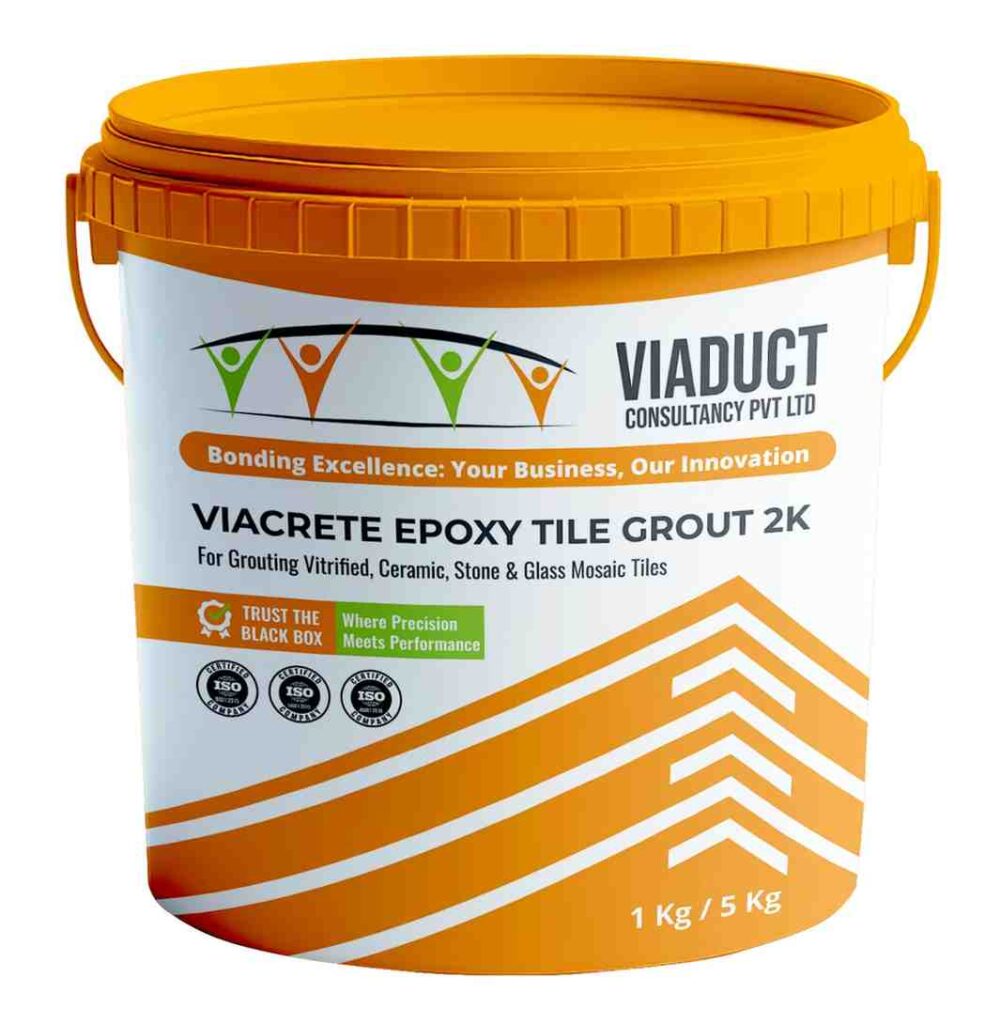
Viaduct epoxy 2K UV grout is a two-part system made of a resin and a hardener. Installers mix the two components on site, and a chemical reaction cures the blend into a hard, durable joint filler. The “UV” designation means the formula resists yellowing and color drift when exposed to sunlight, a common weakness in ordinary epoxy products.
Because the material cures through chemical reaction rather than water evaporation, it delivers consistent strength across the entire grout line. Let’s look at the seven benefits that make it worth considering.
1. Outstanding Stain Resistance
Standard grout absorbs liquids like a sponge. Coffee, wine, oil, and cleaning chemicals seep into the pores and leave permanent marks. Epoxy 2K UV grout forms a sealed, non-porous surface, so spills sit on top and wipe away without residue. Kitchens, dining areas, and restaurant floors benefit most from this feature.
2. UV Resistant Epoxy Grout Keeps Colors True
Sunlight breaks down many epoxy formulas, turning light shades yellow and dulling darker ones. UV resistant epoxy grout holds its original tone, even near large windows, on terraces, and along exterior cladding. Designers can specify white, grey, or bold colors and trust that the finished look stays consistent for years.
3. Superior Water and Moisture Protection
Water penetration causes mold, efflorescence, and tile debonding. The dense structure of epoxy blocks moisture from reaching the substrate. Bathrooms, swimming pool surrounds, steam rooms, and wet kitchens gain a reliable barrier that cement grout cannot match.
4. Strong Chemical and Abrasion Resistance
Acids, alkalis, and harsh cleaners eat away at cementitious joints. Epoxy withstands these agents, which makes it a favorite for laboratories, hospitals, food processing units, and commercial kitchens. The hard surface also handles foot traffic, rolling loads, and frequent scrubbing without wearing down.
5. Excellent Adhesion and Low Shrinkage
Epoxy bonds firmly to tile edges, so the grout line stays intact under thermal movement and vibration. The formula shrinks very little during curing, which prevents hairline cracks and pinholes. Installers get clean, full joints that look professional and perform under stress.
6. Low Maintenance and Hygienic Surfaces
Because the grout resists absorption, dirt and bacteria have nowhere to settle. Regular mopping with mild detergent keeps joints clean, and there is no need for periodic sealing. Property owners save time and money over the life of the installation, and healthcare or food-service spaces meet hygiene expectations more easily.
7. Versatile Use Across Many Projects
Viaduct epoxy 2K UV grout works with ceramic, porcelain, glass, natural stone, and mosaic tiles. Builders apply it on floors, walls, countertops, and facades, indoors and out. This flexibility lets contractors standardize on one product across residential and commercial jobs.
How to Use Epoxy 2K UV Grout
Good results start with preparation. Follow these steps to get a clean, durable finish:
- Prepare the joints. Clear dust, adhesive residue, and debris from the tile gaps. Make sure the tile adhesive has fully cured.
- Mix the components. Combine the resin and hardener in the ratio specified on the product data sheet. Mix with a slow-speed mixer until the color looks uniform, and avoid whipping air into the blend.
- Apply the grout. Spread the mixture across the tiles with a rubber float, pressing firmly at a 45-degree angle so it fills every joint.
- Remove the excess. Scrape surplus material off the surface with the float’s edge, then clean the tile face with a damp sponge before the grout begins to set.
- Finish and cure. Wipe the joints with a clean, damp sponge for a smooth line. Keep foot traffic off the area until the curing period ends.
Work in small sections, since epoxy has a limited working time. Warm temperatures shorten that window, so plan the pace of the job around site conditions.
Choosing Epoxy Grout for Tile Installation
Selecting epoxy grout for tile installation depends on the environment. Projects with wet zones, chemical exposure, or direct sunlight gain the most from an epoxy system. Matching joint width, tile type, and color to the product guidelines gives the strongest outcome. Viaduct epoxy 2K UV grout supports these needs with a formula built for durability and color stability, so contractors and homeowners can plan jobs with confidence.
Planning Your Next Tile Project
Anyone comparing grout options for a new build or renovation can review the technical data sheets from Viaduct Chemtech to see how the product fits their specifications. Reading the details helps teams choose materials that match the project’s demands before work begins.
Frequently Asked Questions
1. Is epoxy 2K UV grout suitable for outdoor use?
Yes. The UV-stable formula resists yellowing and fading, so it performs well on balconies, terraces, and exterior walls.
2. How long does epoxy grout take to cure?
Light foot traffic is usually possible after 24 hours, while full chemical and mechanical strength develops over several days. Check the product data sheet for exact timings.
3. Do I need to seal epoxy grout?
No. The non-porous surface already resists stains and moisture, so sealing is unnecessary.
4. Can I use epoxy grout with any tile type?
It bonds well with ceramic, porcelain, glass, and most natural stone tiles. Test a small area first with porous or delicate stone.
5. Why is mixing so important?
The resin and hardener must combine in the correct ratio for a full chemical reaction. Poor mixing leads to soft spots, uneven color, and weak joints.