

Every structure depends on what sits beneath and between its load-bearing parts. Base plates, anchor bolts, precast joints, and machinery foundations all need a filler that transfers loads without shrinking, bleeding, or cracking. Viaduct Chemtech develops construction chemicals that meet these demands, and its cementitious grout range, Viaduct Cementitious Grout, helps contractors close gaps, secure fixtures, and restore structural integrity with confidence.
Key Takeaways
- Cementitious grout fills voids and gaps and transfers loads evenly between structural elements.
- Non-shrink formulations keep full contact with base plates, bolts, and substrates.
- High early strength shortens downtime and speeds up project schedules.
- Flowable mixes reach tight cavities without vibration or heavy labour.
- Applications range from machinery bases and anchor bolts to precast joints and concrete repair.
What Is Viaduct Cementitious Grout?
Viaduct cementitious grout is a cement-based, factory-blended material that combines cement, graded fillers, and performance-enhancing admixtures. Site teams add clean water, mix it to the specified consistency, and pour or pump it into the target area. The blend flows into narrow spaces, fills them completely, and hardens into a dense, durable mass.
Contractors choose cementitious grout for construction because it bonds well with concrete and steel, and it behaves like the materials around it. Its thermal expansion matches concrete closely, so temperature swings put less stress on the joint. Because the material arrives pre-blended, every batch performs consistently, and crews avoid the guesswork of mixing raw ingredients on site.
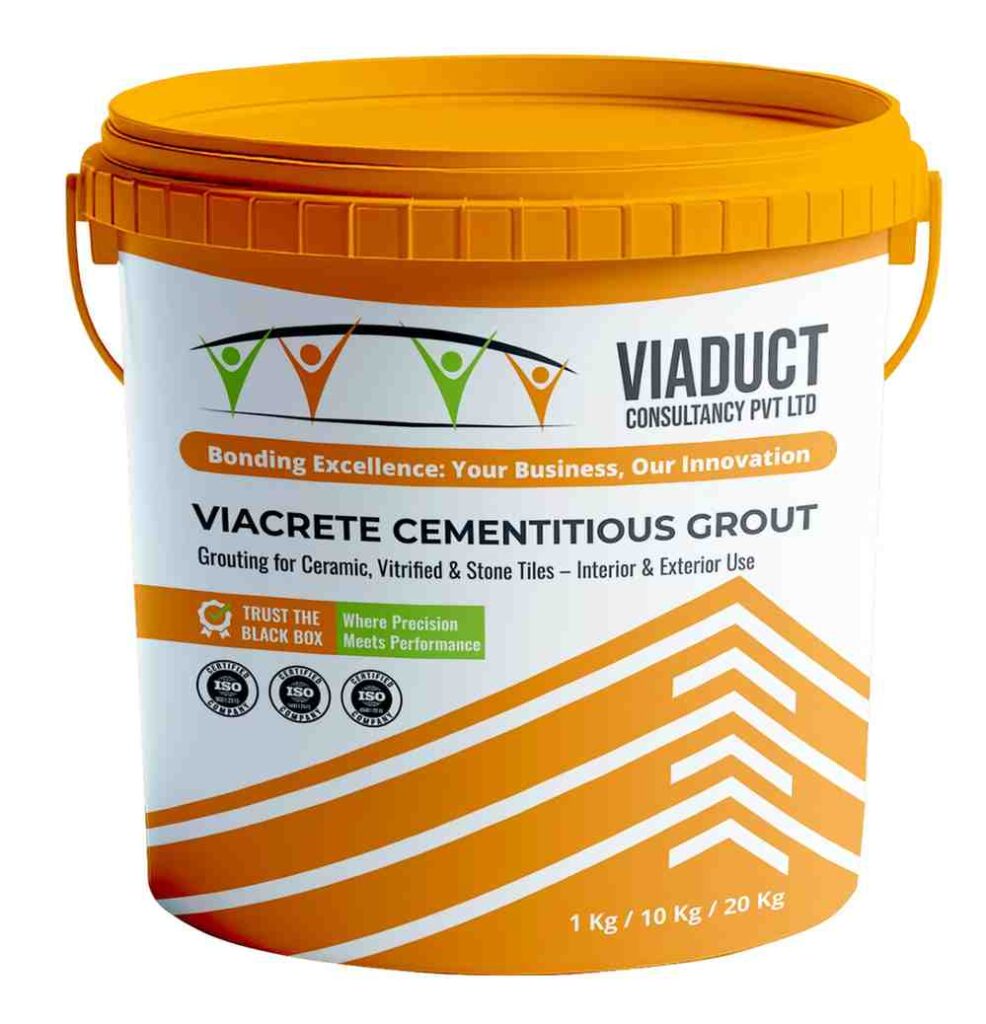
Benefits of Cementitious Grout for Construction
The benefits of cementitious grout for construction go well beyond simple gap filling. Each property below addresses a specific problem that project teams face daily.
Non-shrink performance. Ordinary cement mortar shrinks as it cures, which leaves hollow spots under base plates. Non-shrink cementitious grout holds its volume, so it keeps full bearing contact and carries loads as designed.
High compressive strength. Quality grouts reach high strength within days, which allows crews to tighten bolts, install equipment, or resume loading sooner. That speed cuts idle time and keeps schedules on track.
Excellent flowability. A flowable mix travels through congested reinforcement and tight clearances without segregation. Crews place it quickly, and it settles evenly around anchors and plates.
Strong bond and durability. The hardened grout resists water, freeze-thaw cycles, and chemical exposure. It protects embedded steel from moisture and helps extend the service life of the entire assembly.
Ease of use. Ready-to-mix packaging reduces waste and lets crews prepare the material with basic tools. Predictable water ratios help supervisors control quality from the first bag to the last.
Applications of Cementitious Grout in Construction
The applications of cementitious grout in construction cover nearly every project type, from infrastructure to industrial plants. Understanding cementitious grout applications helps teams match the right product to the right job.
Machinery and Equipment Foundations
Heavy machines generate constant vibration and dynamic loads. Grouting beneath base plates creates a solid, uniform support layer that spreads the load across the foundation. This layer reduces vibration, keeps the machine aligned, and protects the concrete beneath it.
Anchor Bolts and Rebar Fixing
Crews grout anchor bolts, dowels, and reinforcing bars into drilled holes or pockets. Viaduct cementitious grout flows around the steel, bonds tightly, and delivers reliable pull-out resistance. This use matters most in bridges, industrial sheds, and pre-engineered buildings.
Precast and Structural Joints
Precast columns, beams, and wall panels need grouted connections to act as a unified structure. The grout fills joints and sleeves, transfers loads between elements, and seals the connection against moisture.
Concrete Repair and Restoration
Honeycombed areas, damaged sections, and worn surfaces need a repair material that matches the parent concrete. Cementitious grout patches these defects, restores the cross-section, and returns strength to the affected zone.
Bridges, Viaducts, and Infrastructure
Bearing pads, expansion joints, and post-tensioning ducts all demand dependable grouting. Infrastructure projects face heavy traffic, weather, and long design lives, so contractors rely on grouts that hold up under those conditions.
Wind Energy and Industrial Plants
Wind turbine bases, power plant equipment, and process facilities require high-strength grout with precise flow characteristics. These sites operate under demanding loads, and the grout must keep every component secure for decades.
How to Get the Best Results on Site
Good products still need good practice. Follow these steps to get consistent results from any cementitious grout:
- Prepare the surface. Remove dust, oil, laitance, and loose material. Roughen smooth concrete so the grout grips it.
- Saturate the substrate. Wet the concrete beforehand, then remove standing water so the surface absorbs no moisture from the mix.
- Control the water. Measure water exactly as the data sheet states. Extra water weakens the grout and invites bleeding.
- Mix thoroughly. Use a mechanical mixer to create a lump-free, uniform consistency.
- Place continuously. Pour from one side to push air out and avoid trapped voids. Keep the flow steady until the cavity fills.
- Cure properly. Protect the placed grout from rapid drying with wet burlap or a curing compound.
Teams that follow this routine see fewer defects and stronger, longer-lasting installations.
Why Viaduct Cementitious Grout Performs Well on Site
Contractors need materials that behave predictably when schedules tighten and conditions turn difficult. Viaduct cementitious grout delivers stable flow, controlled setting, and dependable strength gain, which lets crews work with confidence in hot, humid, or congested environments. Engineers appreciate the consistent quality from batch to batch, and site managers value the reduction in rework and delays.
The right grout also lowers lifecycle costs. A joint that stays sound needs fewer repairs, and equipment that stays aligned wears more slowly. Choosing a proven cementitious grout for construction protects both the structure and the budget.
Build on a Stronger Foundation
Every project has its own load demands, site conditions, and timelines. If you want to match the right grout to your next base plate, precast joint, or repair job, Viaduct Chemtech offers technical guidance and product data to help you plan the work with clarity. Explore the range, review the specifications, and see how the right grout fits your requirements.
Frequently Asked Questions
1. What is cementitious grout used for in construction?
Crews use cementitious grout to fill voids, secure anchor bolts, support machinery base plates, connect precast elements, and repair damaged concrete.
2. What makes non-shrink grout different from ordinary mortar?
Non-shrink grout keeps its volume as it cures, so it maintains full contact with the surfaces around it. Ordinary mortar shrinks and leaves gaps that weaken load transfer.
3. How quickly does cementitious grout gain strength?
Strength gain depends on the product, water ratio, and temperature. Many high-performance grouts reach usable strength within a few days, and data sheets list exact timelines.
4. Can Viaduct cementitious grout work for both structural and repair jobs?
Yes. Viaduct cementitious grout suits structural grouting, such as base plates and anchor bolts, as well as repair work on damaged concrete, provided the crew selects the correct grade for the task.
5. What affects the performance of cementitious grout on site?
Surface preparation, accurate water measurement, thorough mixing, continuous placement, and proper curing all shape the final result.