

A wall finish is only as good as the surface beneath the paint. Cracks, pinholes, and uneven patches show through even premium coatings, which is why builders and painters rely on putty to level the base. White cement wall putty has become the preferred choice because it bonds firmly, resists moisture, and delivers a bright, even base for any shade. Behind that performance sits a controlled production system where raw material choice, mixing accuracy, and testing decide the final result. Manufacturers like Viaduct Chemtech treat each of these steps as a measurable discipline rather than a guess. This article explains how the product is made and what separates a dependable batch from a weak one.
Key Takeaways
- White cement wall putty manufacturing depends on precise raw material selection and consistent batch control.
- Binder quality, filler fineness, and polymer dosage directly shape adhesion, workability, and durability.
- A fixed wall putty production process reduces batch variation and protects finish quality.
- Regular wall putty quality control tests catch defects before bags reach the site.
- A smooth wall putty finish comes from correct formulation, proper packaging, and correct application.
What Is White Cement Wall Putty?
White cement wall putty is a dry powder that applicators mix with water to form a paste. Painters apply it in thin coats over plaster, concrete, or brick surfaces to fill minor imperfections and create a flat base. The white cement binder gives the paste strength and a clean, bright tone, while additives control flow, water retention, and bonding.
Understanding white cement wall putty manufacturing helps contractors, dealers, and plant owners judge product quality. Two bags may look identical, yet their internal composition, particle size, and additive balance can differ sharply. Those differences show up later as peeling, chalking, or rough surfaces.
White Cement Putty Raw Materials
Every batch starts with raw material selection. The white cement putty raw materials list is short, but each ingredient carries a specific job.
White cement acts as the main binder. It hardens through hydration, builds strength, and keeps the surface bright. Producers choose cement with low iron content and high whiteness, since impurities dull the final color.
Fillers make up the bulk of the mix. Fine limestone powder, dolomite powder, and talc are common choices. Their particle size matters: finer fillers pack tightly and produce a denser layer, while coarse particles leave a gritty texture.
Redispersible polymer powder improves adhesion and flexibility. It helps the putty grip the substrate and absorb small movements without cracking.
Cellulose ethers, such as HPMC, retain water in the paste. Without them, the wall would draw moisture from the putty too fast, causing weak curing and surface cracks.
Minor additives include dispersing agents, defoamers, and sometimes whitening agents. Small in quantity, they improve mixing behavior and finish consistency.
White Cement Putty Formulation
A strong white cement putty formulation balances binder, filler, and additives so the paste spreads easily, sticks well, and cures evenly. Formulators adjust ratios based on the target application, climate, and performance grade.
A typical formulation follows a broad pattern: white cement forms roughly 35 to 50 percent of the blend, fillers fill most of the remaining weight, and polymers and cellulose ethers account for small percentages. Even a fraction of a percent change in cellulose ether can shift workability and open time noticeably.
Formulators test trial batches before approving a recipe. They check spreading ease, setting time, bond strength, and shrinkage. Hot, dry regions often need higher water retention, while humid regions benefit from tighter moisture resistance. A recipe that suits one market may need tuning for another.
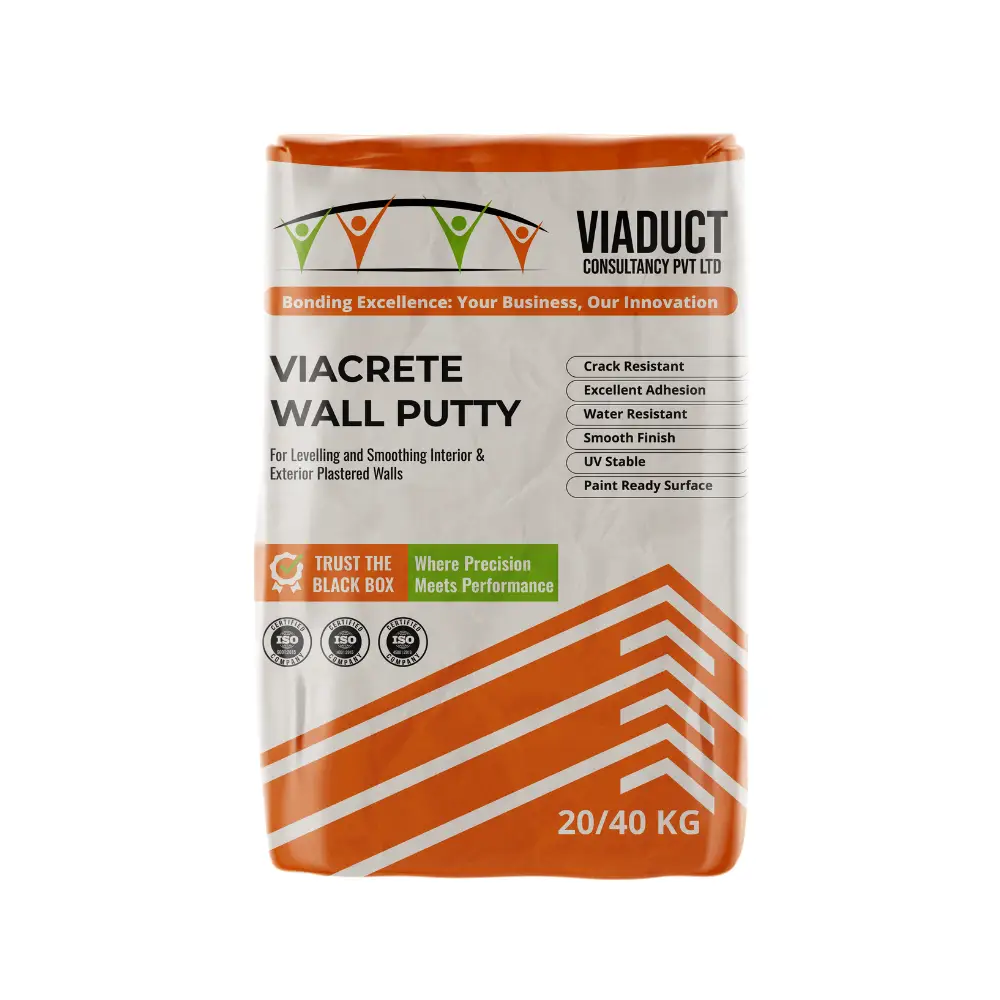
White Cement Wall Putty Manufacturing Process
The white cement wall putty manufacturing process follows a clear sequence. Each stage feeds the next, so errors early on carry through to the final bag.
- Raw material inspection. Technicians sample incoming cement, fillers, and additives. They reject lots that miss whiteness, moisture, or fineness limits.
- Drying and grinding. Operators dry fillers to remove moisture, then grind and sieve them to the required particle size.
- Batching. Automated weighing systems measure each ingredient against the approved formulation. Accurate dosing of polymers and cellulose ethers matters most here.
- Mixing. Ribbon or paddle mixers blend the powders until the mixture reaches uniform distribution. Mixing time is fixed, because under-mixing leaves pockets of unblended additive, while over-mixing can degrade fine particles.
- Sieving. The blended powder passes through screens that catch lumps and oversized particles.
- Packing. Machines fill moisture-resistant bags with measured weights and seal them tightly.
Wall Putty Production Process: Plant Setup and Controls
The wall putty production process also depends on how the plant itself is organized. Dust control, dry storage, and calibrated equipment all protect product consistency.
Storage areas must stay dry, because white cement and polymer powders absorb moisture and clump. Weighing scales need regular calibration. Mixers need scheduled cleaning to prevent cross-contamination between grades. Operators follow written batch cards so every shift produces the same product.
Plant owners planning new setups usually weigh capacity against automation. Semi-automatic lines suit smaller operations, while fully automated lines deliver tighter batch accuracy and higher output.
Wall Putty Quality Control
Reliable wall putty quality control separates trusted brands from inconsistent ones. Laboratories run tests on every batch, and many plants retain a sample from each lot for later reference.
Key tests include:
- Fineness: Sieve analysis confirms particle size distribution.
- Whiteness: A reflectance meter measures brightness against a standard.
- Water retention: Technicians check how well the paste holds moisture.
- Setting time: Initial and final set times confirm workable application windows.
- Bond strength: Pull-off tests measure adhesion to cement substrates.
- Moisture content: Low moisture in the powder protects shelf life.
- Shrinkage and crack resistance: Applied test panels reveal surface defects after curing.
Plants that record these results batch by batch can trace any complaint back to its source and correct the cause quickly.
How Manufacturing Controls Create a Smooth Wall Putty Finish
A smooth wall putty finish comes directly from decisions made on the factory floor. Fine, well-graded fillers remove grit. Correct polymer dosage prevents hairline cracks. Balanced cellulose ether levels give the paste a creamy texture that spreads evenly and sands cleanly.
Applicators still play a part. Clean, damp surfaces, correct water ratios, thin coats, and proper curing between layers all help the putty perform as designed. Yet even skilled applicators struggle with a poorly made product, which makes the manufacturing standard the foundation of every good wall.
Common Manufacturing Mistakes to Avoid
Producers sometimes lose quality through avoidable errors:
- Using low-grade fillers that contain clay or excess moisture
- Skipping calibration of weighing equipment
- Cutting polymer or cellulose ether dosage to reduce cost
- Storing finished bags in damp areas
- Releasing batches without lab verification
Each shortcut saves a little money upfront but costs far more in rework, returns, and reputation. Dealers and contractors remember products that fail on the wall.
Strengthening Your White Cement Wall Putty Manufacturing Standards
Strong white cement wall putty manufacturing rests on three habits: selecting verified raw materials, following a documented process, and testing every batch. Plant owners who build these habits into daily routines produce putty that applicators trust and homeowners notice in the finished room.
Teams exploring formulation support, raw material guidance, or process improvement can connect with Viaduct Chemtech to understand how technical expertise supports consistent, high-performing putty production.
FAQs
1. What is the main binder in white cement wall putty?
White cement serves as the main binder. It provides strength, adhesion, and a bright base that suits light and vivid paint shades.
2. Which raw materials affect putty quality the most?
White cement quality, filler fineness, polymer powder, and cellulose ether have the strongest influence on adhesion, workability, and surface texture.
3. How do manufacturers keep batches consistent?
They use automated weighing, fixed mixing times, written batch cards, and laboratory testing on every lot.
4. Why does wall putty crack after application?
Common causes include low polymer content, poor water retention, thick coats, and weak surface preparation.
5. How long can white cement putty powder be stored?
Stored in sealed bags in a dry area, it typically stays usable for about six months, depending on packaging and humidity.