

A floor is only as good as the layer beneath it. Tiles crack, vinyl bubbles, and epoxy coatings peel when the base underneath them fails. Builders, contractors, and site engineers know this, which is why they choose their screed carefully before they lay a single finish. Viaduct Chemtech develops construction chemical products that address these base-layer problems, and its screed range gives crews a stronger starting point for every flooring system. This article walks through seven practical benefits that explain why more projects specify this material.
Key Takeaways
- The screed delivers a flat, level surface that supports every type of floor finish.
- It bonds firmly to the substrate, which reduces hollow spots and delamination.
- Faster curing shortens project schedules and gets other trades on site sooner.
- Strong compressive performance handles heavy foot traffic and equipment loads.
- Crack resistance protects finished floors from early repairs.
- Consistent mixing and application cut material waste and labor costs.
- It suits residential, commercial, and industrial floor screed applications.
1. A Smooth, Level Surface for Every Finish
Flooring contractors want a flat base, because even small undulations show through thin finishes like vinyl, laminate, and polished coatings. Viaduct Blackbox floor screed spreads evenly and settles into a uniform plane, which gives installers a dependable platform. Crews spend less time grinding high spots or patching low ones. The result is a cleaner, faster finish installation and fewer complaints after handover.
2. Strong Bonding With the Substrate
Debonding ranks among the most expensive floor failures. When a screed lifts from the slab, hollow patches develop, and finishes crack above them. A well-formulated screed grips the substrate and holds its position under stress. Proper surface preparation (cleaning, priming, and moisture checks) helps the bond perform as designed. These floor screed benefits compound over time, because a firmly bonded layer distributes loads evenly instead of concentrating stress at weak points.
3. Faster Curing and Shorter Schedules
Time on site costs money. Every day a floor stays closed to other trades pushes back handover dates and raises overhead. Viaduct Blackbox floor screed cures at a pace that helps project managers keep sequences tight, so plumbers, electricians, and finishers can move through their tasks without long waits. Teams still need to follow the recommended curing practices, but the shorter window gives schedulers more flexibility than slower traditional mixes.
4. High Compressive Strength for Demanding Loads
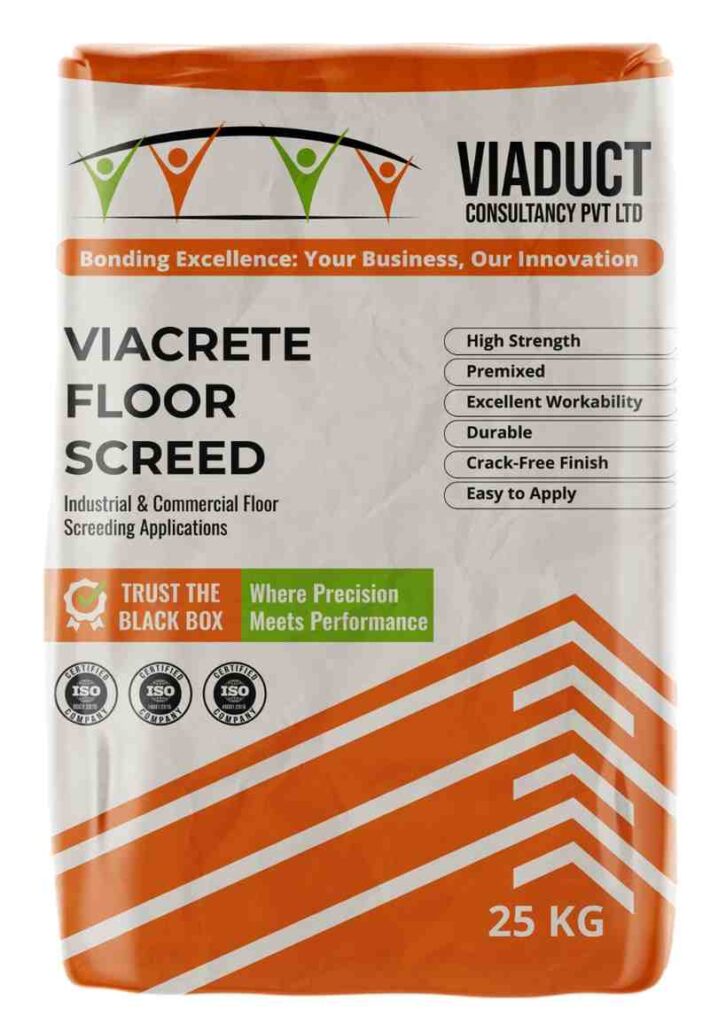
Modern buildings place real demands on floors. Warehouses run forklifts, retail spaces handle constant foot traffic, and parking decks carry vehicle loads every day. A high-strength screed resists crushing, rutting, and surface wear under these conditions. Engineers who specify floor screed solutions for heavy-duty zones look first at compressive strength, since it directly influences service life. Stronger screeds also keep the surface intact when contractors install racking, machinery, or partition walls.
5. Reduced Cracking and Shrinkage
Shrinkage cracks start small and grow into large problems once finishes go over them. Quality screed formulations control shrinkage during curing, which lowers the risk of hairline cracks and surface crazing. Contractors can strengthen that protection by cutting movement joints at the right spacing and curing the surface under controlled conditions. Fewer cracks mean fewer callbacks, and owners keep their floors looking sharp for years.
6. Versatility Across Project Types
Few materials work in as many settings as a good screed. Residential builders use it under tiles, timber, and carpet. Commercial teams rely on it in offices, malls, hospitals, and schools. Industrial crews apply it in factories, workshops, and storage facilities. These floor screed applications share one requirement: a stable, durable base. Viaduct Blackbox floor screed adapts to all of them, so procurement teams can standardize on one product across multiple sites instead of juggling several.
7. Cost Efficiency Across the Building Lifecycle
Material price tells only part of the story. A screed that bonds well, cures quickly, and resists cracking saves money through every stage of a project. Crews finish faster, rework drops, and finishes last longer. Contractors also benefit from consistent product quality, which makes quantities easier to estimate and waste easier to control. Teams that weigh floor screed for modern construction projects should calculate lifecycle cost, not just the price per bag. Viaduct Blackbox floor screed rewards that approach with dependable performance from installation day onward.
How Better Screed Choices Shape Modern Buildings
Today’s developments push floors harder than ever. Underfloor heating, large-format tiles, resin coatings, and heavy equipment all demand a precise, stable substrate. Architects and engineers increasingly specify floor screed for construction with these systems in mind, because a weak base undermines even premium finishes. Choosing a screed that meets the technical demands of each layer keeps the entire floor assembly working together.
Site teams also care about ease of use. A product that mixes consistently and spreads predictably reduces the skill gap between experienced and newer installers. That consistency matters on large projects where several crews work in parallel.
Explore Reliable Floor Screed Support
Every project has its own substrate conditions, load requirements, and timelines. Contractors and specifiers who want to match a screed to their site can reach out to Viaduct Chemtech for technical data sheets, application guidance, and product details that fit their specific scope.
FAQs
1. What is Viaduct Blackbox floor screed used for?
Builders use it as a leveling and base layer beneath floor finishes such as tiles, vinyl, timber, and coatings. It suits residential, commercial, and industrial interiors.
2. How long does floor screed take to cure?
Curing time depends on thickness, temperature, humidity, and ventilation. Follow the manufacturer’s data sheet and allow the surface to reach the recommended moisture level before installing finishes.
3. Can floor screed handle heavy industrial loads?
Yes, when the mix design, thickness, and substrate preparation match the load requirements. Engineers should confirm specifications for forklifts, racking, and machinery.
4. Does floor screed need surface preparation?
Yes. Crews should clean the substrate, remove dust and laitance, repair defects, and apply a primer or bonding agent where the product guidelines call for it.
5. How do I prevent cracks in a screeded floor?
Cut movement joints at proper intervals, cure the surface evenly, avoid rapid drying, and follow the recommended mixing ratios and thickness limits.